
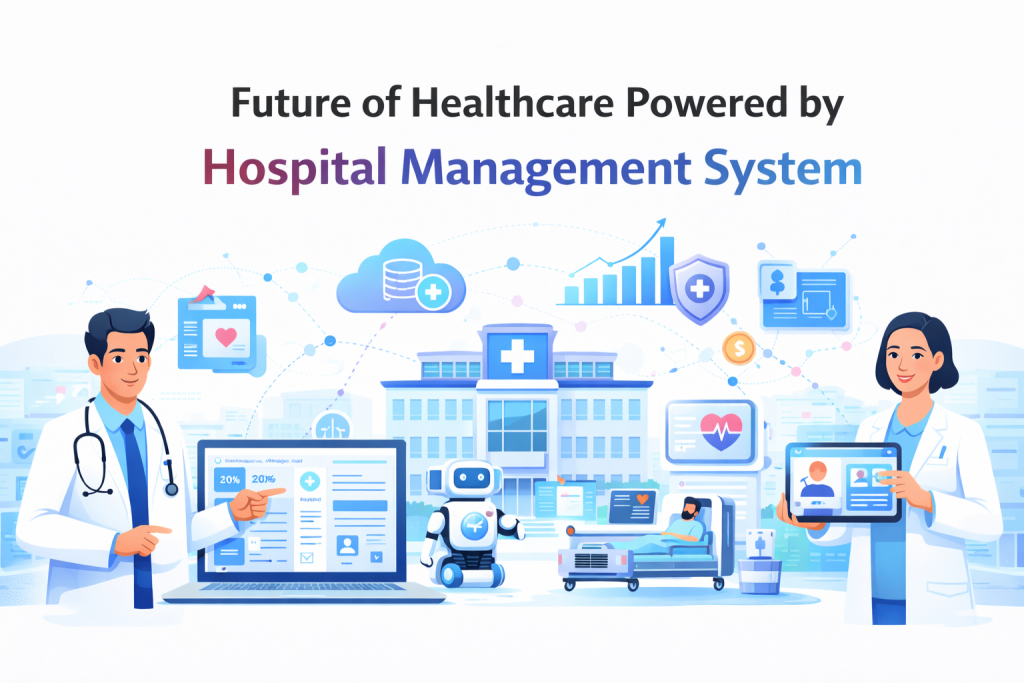
It is digital infrastructure that advances efficiency, accuracy, and patient outcomes to reshape the future of healthcare. Healthcare Hospital Management Systems facilitate a smooth flow of data, automatic processes and real-time information interdepartmentalization. An intelligent hospital management system can help make decisions faster, minimize costs of operation, and increase patient engagement. With the transformation of the healthcare industry, such systems are significant to provide connected, scalable, and patient-centered care and enable sustainable growth and long-term digital transformation.
Evolution of Hospital Management System Technology
The development of the technology of hospital management systems demonstrates the increased need for its efficiency, accuracy, and digitalization in health care nowadays. The systems in the early days were minimal in that they were only used in keeping records and billing which was mostly done manually further delaying the management of the hospital as well as adding up to the mistakes. With the rise in technology, Hospital Management System Software developed to combine clinical, administrative and financial processes in a unified electronic system.
As the internet of things took advantage of the emergence of cloud computing, hospital management system online solutions allowed access to patient data, scheduling of appointments and also tracking resources on a real-time basis anywhere. This change gave healthcare professionals the ability to make decisions more quickly and informed as well as enhanced interdepartmental coordination. The other forces that were strengthening the hospital management were automation, analytics and interoperability, which minimized the operational cost and improved patient safety.
Modern systems can be used today to facilitate scalable operations, a smooth integration process, and better patient engagement. With healthcare remaining dynamic, the use of the modern hospital management system technology is important in streamlining operations, assisting the healthcare professionals, and providing high quality and sustainable services.
Role of Digital Transformation in Healthcare
Online transformation is crucial in transforming the health care system in terms of efficiency, access, and quality of services. The use of modern technology helps healthcare organizations to facilitate clinical and administrative processes and promote patient interaction. Centralization of information, automation of processes, and real-time departmental decision-making are some of the main hospital management system benefits.
The smart hospital management system is based on the use of digital tools, including cloud solutions, analytics, and automation, which enable the reduction of errors, resource optimization, and transparency in operations. In the expanding online world, Hospital Management Software In India is assisting the healthcare institutions to handle large numbers of patients, regulatory compliance, and consistent care delivery.
The digital transformation also enhances interprofessional communication, increases the level of data security, and facilitates scalable expansion. Through the incorporation of new technology in their daily processes, healthcare organizations will have a better opportunity to act more swiftly to satisfy their clients, enhance the quality of services offered, and create a more interconnected, efficient, and patient-centered healthcare environment that is recession-resistant.
Automation and Workflow Optimization in Hospitals
Hospital workflow is being changed by automation and optimization of work to give efficient, accurate and patient-centered care to patients. Hospitals can minimize the number of manual errors, minimise the turnaround time and enhance departmental coordination by digitising routine tasks. The Major Characteristics of Hospital Management systems are the automated appointment scheduling, billing, inventory control and real-time reporting of which simplify the daily operations.
The availability of information about the centralized hospital management system allows healthcare teams to make clinically faster decisions and communicate with one another more easily. A queue management system in a hospital also improves the flow of patients by reducing the wait time, scheduling appointments and providing better service to the patients. Such automated mechanisms enable the healthcare personnel to pay more attention to the patients as opposed to administration overheads.
Cloud Based solutions based on AI go a notch higher by providing predictive analytics, intelligent alerts and on-demand system performance. This type of technology facilitates effective use of resources, enhances transparency in operations, and is responsive to shifts in the needs of the hospital. With the further development of the healthcare industry, the use of automation and streamlined workflow remains a critical component of the delivery of high-quality care without affecting operational performance.
Cloud-Based Hospital Management System Advantages
Cloud computing is transforming the way hospitals operate, store information and treat patients in the digital age. Cloud Based Hospital Management System is an AI-based system that is flexible, has real-time access, is intelligent, and automated to enable quicker and more precise decision-making. The capability to centralize information is one of the major benefits of the system in hospital management, as it leads to smooth coordination of activities in the department and location.
Cloud technology is advantageous to Hospital Management Systems in Healthcare since it is scalable, offers better data security, and it lowers the cost of the infrastructure. Patient records, reports and analytics can be safely accessed anytime by healthcare teams, enhancing continuity of care and operational effectiveness. Hospital management Software In India is going towards cloud platforms with an aim of handling high volumes of patients and various workflows easily because of the fast changing market.
Moreover, cloud systems facilitate automatic upgrades, regulatory adherence, and collaboration with progressive digital solutions. Using AI-driven insights and flexible cloud services, healthcare organizations are able optimize resources and improve patient experience, and create a future-ready digital infrastructure to enable sustainable growth and innovation.
AI and Analytics in Modern Hospital Operations
Intelligent machines and analytics are taking a radical turn in the contemporary hospital processes where they allow making more intelligent decisions, effective workflows, and better patient results. In real-time data processing, hospitals will be able to obtain valuable, practical information in the clinical, administrative, and financial spheres. State-of-the-art analytic modules of hospital management systems assist in performance monitoring, resource allocation optimization, and patient needs prediction, enhancing the comprehensive hospital management.
The AI solutions are also beneficial in the hospital queue management system as they analyze the flow of patients and minimize wait times and optimize appointment booking. These smart tools are useful in ensuring that healthcare institutions balance their workloads, deal with peak hours, and provide patients with smoother experiences. Through the use of data-driven insights, hospitals can enhance the quality of services with minimal operational inefficiencies.
Within the wider healthcare ecosystem, analytics can be used to provide proper reporting, risk analysis, and compliance verification. The models that are AI-driven help to find the trends, predict demand, and facilitate quicker decision-making. With the ongoing changes in the healthcare field, the idea that AI and analytics will be incorporated into hospital management systems is becoming an indispensable tool of operational excellence, patient satisfaction, and future-ready and resilient healthcare infrastructures.
Conclusion
According to smart, linked, and effective digital systems, the future of healthcare is in an intelligent system that aids in the provision of quality care. The use of a modern hospital management system allows the smooth flow of operations, real-time data access, and effective decisions made by each department. Since healthcare establishments move towards the advanced technologies, these systems will be at the forefront of enhancing patient outcomes, streamlining operations, and creating long-term sustainable and patient-centered healthcare settings that are prepared to grow over time.