
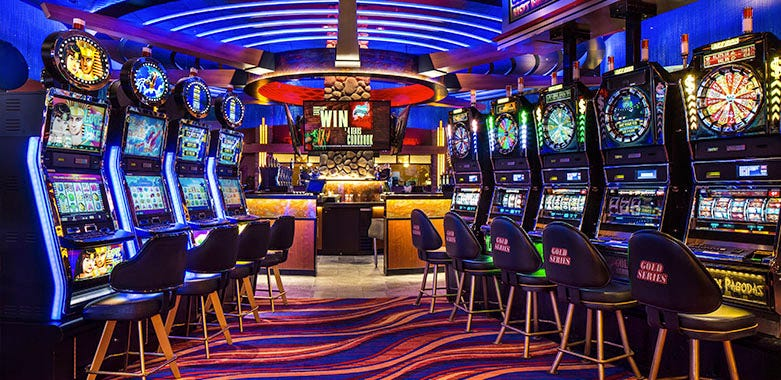
Introduction: The Hidden World of Slot Machines
Slot machines are the heartbeat of every casino. They flash, ring, and dazzle, promising fortune with every spin. But behind those hypnotic reels lies a world carefully engineered to make you spend more, stay longer, and—most importantly—lose more often than you win. These machines aren’t just games; they’re masterpieces of psychological design, precision mathematics, and emotional manipulation.
Ever wondered why it feels like you “almost won”? Or why, even after hours of playing, you’re convinced that the next spin will be the one? That’s not luck—it’s psychology. Slot machines are built to make you believe that you’re always just one spin away from striking gold. And the casinos? They’re perfectly happy to let you think that way.
In this article, we’ll peel back the curtain and reveal the deepest secrets casinos don’t want you to know about slot depo 10k machines. From the hidden math behind every spin to the way casinos use lighting and sound to keep you glued to your seat, you’ll learn how these glittering machines really work—and how to play smarter if you choose to play at all.
The Psychology Behind Slot Machines
Casinos spend millions of dollars on designing slot machines—not just to make them look good, but to make them irresistible. Every sound, flash, and animation is scientifically engineered to keep your brain hooked. The moment you press that button and hear the reels spin, dopamine—your brain’s “feel-good” chemical—starts flowing. This creates a cycle of anticipation and reward that can become highly addictive.
Ever noticed how even small wins feel like a big deal? That’s deliberate. Slot machines use a concept called losses disguised as wins. You might bet $1 and win $0.50, but the machine celebrates with flashing lights and upbeat music as if you hit a jackpot. Psychologically, your brain interprets that celebration as success, even though you actually lost money.
Colors and sounds also play a major role. Bright reds and golds suggest wealth and luck, while flashing lights mimic the excitement of winning. The upbeat, celebratory jingles are carefully tuned to trigger emotional highs. Every time the machine sings to you, it’s training your brain to crave more. Casinos know that the more stimulated and excited you are, the longer you’ll play—and the more you’ll spend.
Slot designers call this the “flow state”—a mental zone where you lose track of time, money, and even reality. Once you’re in it, hours can pass without you noticing. You might think you’re playing for fun, but in reality, the game is playing you.
The Myth of “Randomness”
You’ve probably heard that slot machines are “completely random.” It’s true—to an extent—but not in the way most players think. Every modern thor138 machine runs on something called a Random Number Generator (RNG). This tiny computer chip constantly produces thousands of number combinations per second, even when the machine isn’t being played.
When you hit the spin button, the RNG stops at a number that corresponds to a particular outcome on the reels. So yes, your result is “random” in that it can’t be predicted—but that doesn’t mean every spin has an equal chance of winning. The RNG is programmed to favor the house. The outcomes are statistically weighted to ensure that over time, the casino always profits.
Here’s the catch: even if you think you’re “due for a win,” the machine doesn’t know or care. It doesn’t remember your previous spins or track how much you’ve lost. Every spin is independent. But the math ensures that your odds stay stacked against you—usually somewhere between 85% and 98% payout, depending on the machine and location.
Casinos like to promote the illusion that persistence pays off. “Keep spinning, your turn is coming!” they suggest. But in reality, the longer you play, the closer your results will align with the programmed payout percentage—which is always less than 100%.
So while the game might feel random, it’s actually meticulously controlled randomness—a dance between illusion and mathematics designed to keep you hopeful and spending.
Payout Percentages: What Casinos Won’t Tell You
Every slot machine has a secret number known as its RTP, or Return to Player percentage. This is the average amount of money a machine pays back to players over time. For instance, a slot with an RTP of 96% theoretically returns $96 for every $100 bet—but that doesn’t mean you’ll get that $96 back in a single session. In fact, most people never do.
Casinos often place machines with lower RTPs in high-traffic areas—near entrances, bars, or bathrooms—where casual players are most likely to stop and play. They reserve the higher RTP machines for areas with loyal, high-stakes gamblers. You’ll rarely see casinos advertise their RTP rates openly, but they’re crucial for understanding your odds.
Here’s what makes RTP so sneaky: a difference of just 2% can dramatically affect your long-term outcome. A 96% RTP might sound generous compared to 94%, but over thousands of spins, that 2% adds up to hundreds—sometimes thousands—of dollars lost.
And don’t be fooled by machines that appear to pay frequently. Frequent small wins keep you engaged but disguise the fact that the machine’s overall payout rate is low. Casinos know that as long as you’re getting regular “wins,” you’ll keep feeding the machine, convinced you’re on a hot streak.
If you ever have the chance, look for the game’s information screen. Some jurisdictions require casinos to display RTP values, but many don’t. The truth is, casinos would rather you focus on flashing lights and the “fun” of playing than the cold math of your odds.